
Defect detection
AI vision can classify print defects, coating voids, web edge damage and registration problems more quickly when the camera sees a stable, repeatable web.
Resources / Industrial Automation Blog
AI adoption in packaging is moving beyond isolated pilots. For roll-to-roll lines, the next quality gains will depend on a practical foundation: stable web position, controlled tension and clean sensor data.
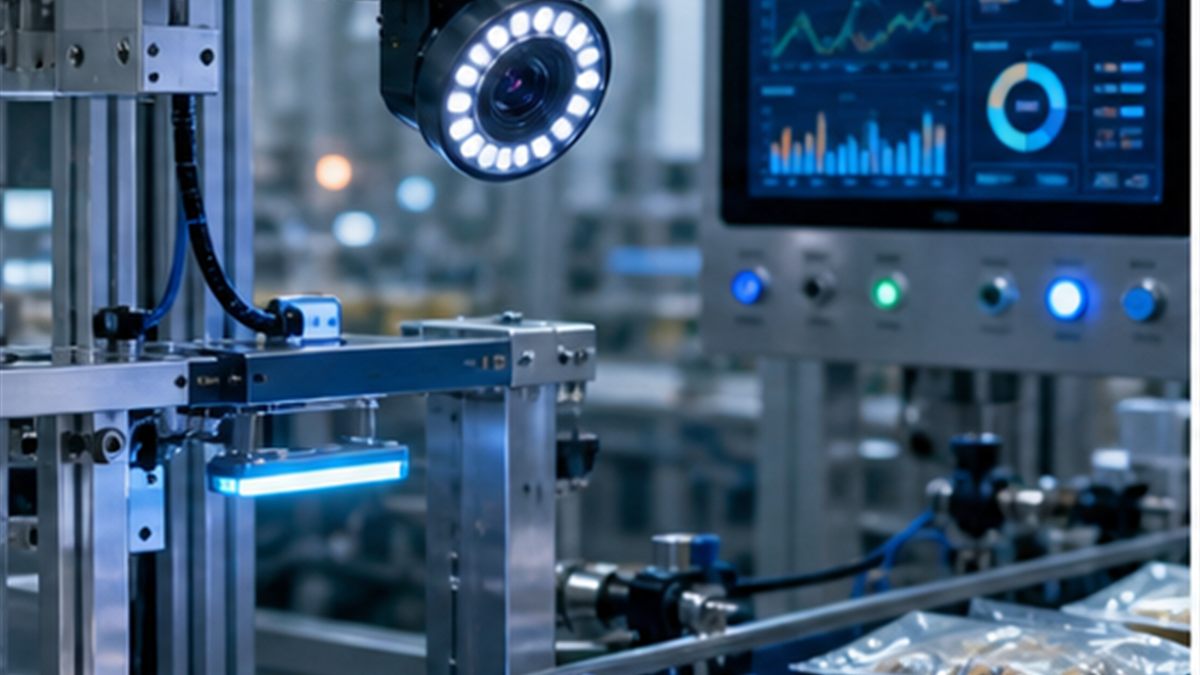
Machine vision can detect more defects, but it cannot correct a web that is wandering, stretching or wrinkling before it reaches the camera.
PMMI's 2026 AI packaging report describes growing adoption of AI across machine performance, workforce enablement and data governance. In a related March 2026 update, PMMI notes that knowledge transfer and machine vision are among the AI applications with the strongest momentum, followed by predictive maintenance, compliance and data transparency.
For converters and OEM builders, the practical message is straightforward: AI becomes more useful when the machine produces repeatable data. Web guiding systems, tension controllers and stable actuator response are not old-fashioned hardware; they are the physical layer that makes AI quality control trustworthy.
AI vision can classify print defects, coating voids, web edge damage and registration problems more quickly when the camera sees a stable, repeatable web.
If tension, edge position and actuator correction data are available, engineers can separate material defects from handling defects.
AI can guide troubleshooting, but operators still need clear control zones, setpoints and alarm logic at the machine level.
Vision systems work best when the target is held in a known position. On flexible film, labels, foil, nonwoven and battery materials, lateral web wander can make a good inspection system report unstable results. A web guide controller, edge sensor and actuator keep the web edge, centreline or printed line in the expected location so the inspection system can focus on true quality variation.
Unstable tension can create stretching, wrinkles, registration drift and inconsistent rewind quality. AI may identify the defect, but closed-loop tension control helps prevent the physical condition that caused it. Load cells, tension detectors and automatic tension controllers provide the feedback needed to keep material force within a controlled range.
KRD components support the machine-level stability needed before AI inspection and analytics can deliver reliable results.
No. AI vision can detect and classify defects, but web guiding physically keeps the material aligned before inspection.
Common causes include web wander, wrinkles, unstable tension, poor lighting, dirty sensors, vibration and inconsistent material tracking.
Useful signals include tension feedback, edge position, actuator correction, line speed, roll diameter, alarm history and inspection reject data.
Share your material, web width, line speed and inspection challenge. KRD can help match web guiding and tension control components for a more stable roll-to-roll process.