
Lightweighting
Thinner structures reduce material use but often leave less tolerance for unstable tension, wrinkles and edge damage.
Resources / Industrial Automation Blog
Sustainability requirements are no longer only a material purchasing issue. They are becoming machine specification issues for packaging OEMs, converters and production teams.
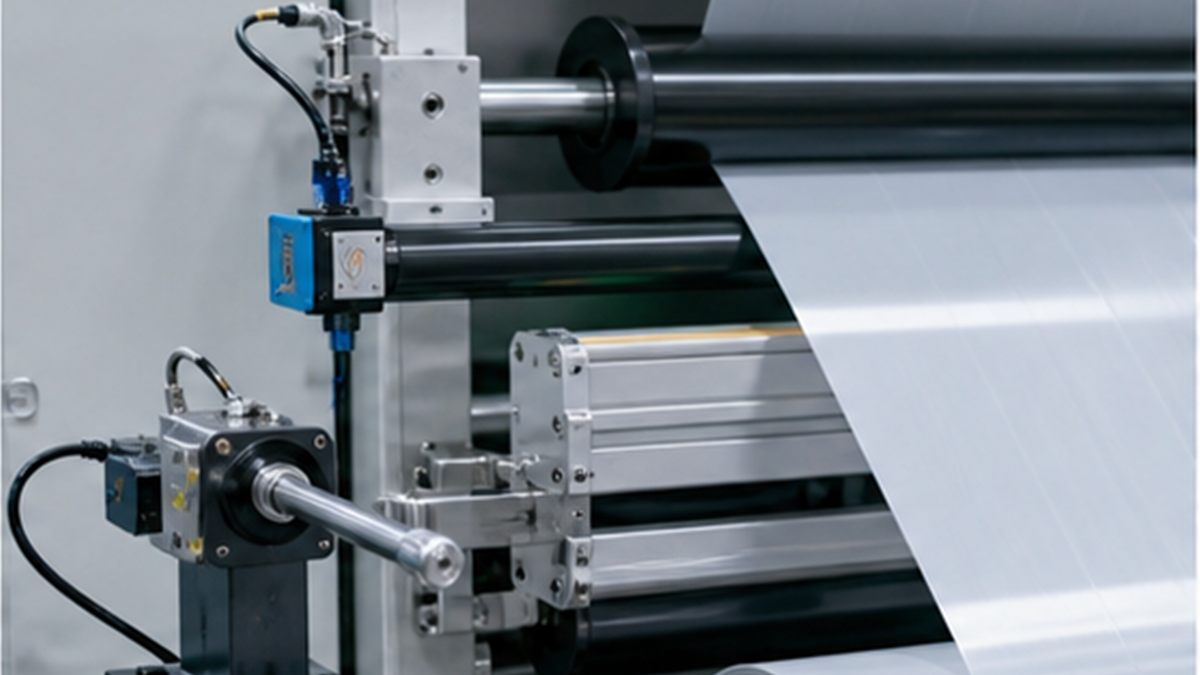
Lightweight films, PCR content and recyclable structures can change stretch, stiffness, curl, coefficient of friction and tracking behaviour.
PMMI's June 2026 report on CPG sustainability and OEM specifications describes how consumer, retailer and regulatory pressures are moving upstream into machinery requirements. The report highlights material transitions, equipment compatibility, EPR-driven market variation, data transparency, modular upgrade paths and embedded monitoring.
For packaging lines that handle flexible webs, these are not abstract trends. A lighter film or recycled-content structure may behave differently through unwind, printing, coating, lamination, slitting and rewind. That changes what OEMs should specify for tension control, web guiding, sensing and machine data.
Thinner structures reduce material use but often leave less tolerance for unstable tension, wrinkles and edge damage.
New structures can change stiffness, surface finish and sensor response, requiring careful testing before full production.
More sustainability reporting can increase demand for traceable machine settings, rejects, downtime and quality conditions.
A packaging machine built for one film family may not run the next structure with the same setup. OEMs and converters should review whether the machine has enough control range and feedback to handle material variation. That includes tension sensors, closed-loop tension control, edge or centre guiding, actuator stroke, guide response and operator interface clarity.
Material changes can affect how the edge is detected and how the web tracks through rollers. Transparent or low-contrast films may require ultrasonic sensing, while printed marks or high-contrast edges may work better with photoelectric or camera-based sensing. A stable guide response helps reduce trim waste and keeps the web aligned for inspection, sealing, slitting and finishing.
Lightweight and recyclable films can be more sensitive to stretch and deformation. Closed-loop tension control helps maintain consistent web force as roll diameter, line speed and process load change. For converters, that can mean fewer wrinkles, better registration and more consistent rewind quality.
KRD products help packaging OEMs and converters keep new material structures stable through guiding and tension zones.
Lightweight films often have less tolerance for stretch, wrinkles and deformation, so consistent tension becomes more important during unwind, print, slit and rewind.
Not always. Transparent, reflective, printed and low-contrast materials may require different sensor technologies or mounting setups.
They should design modular machines with documented settings, stable feedback loops, upgrade space and sensors tested against the actual material structures.
Send KRD your web width, material type, speed range and control zone. We can help match web guiding and tension control components for sustainable packaging applications.